Conquering Khardung La & the Ladakh Marathon: Sandeep Gauba’s Journey
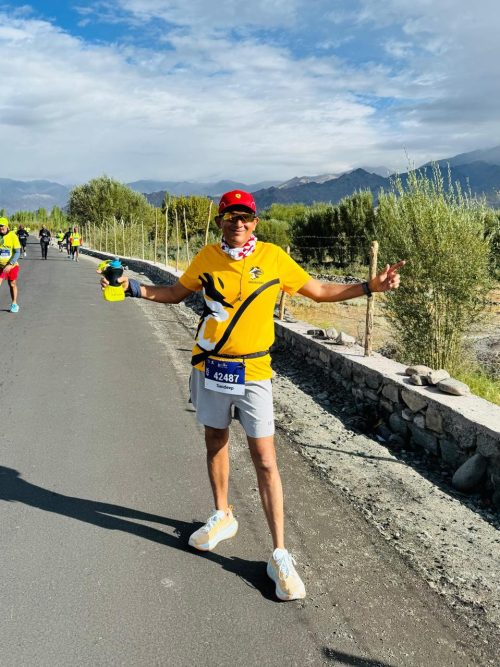
Preparation: Planning and Discipline
“When I registered for the Khardung La Challenge, I figured why not sign up for the Ladakh Marathon as well? If I’m making the trip, might as well get the best return on investment!”
Preparation was intense. Drawing from his professional experience with Japanese organizations, Sandeep applied the PDCA (Plan–Do–Check–Act) approach. He set weekly targets—intervals, tempo runs, long slow distance runs, and strength training—followed them diligently despite work travel, reviewed progress weekly with his coach, and made adjustments as needed.
Acclimatization was another key element. He arrived in Leh 14 days early, took two full days to rest, then gradually introduced runs: a 15 km to Shanti Stupa, a trek-run to Khardung La Top, and finally a 17 km run from North Pullu to the top. These sessions gave him the confidence he needed.
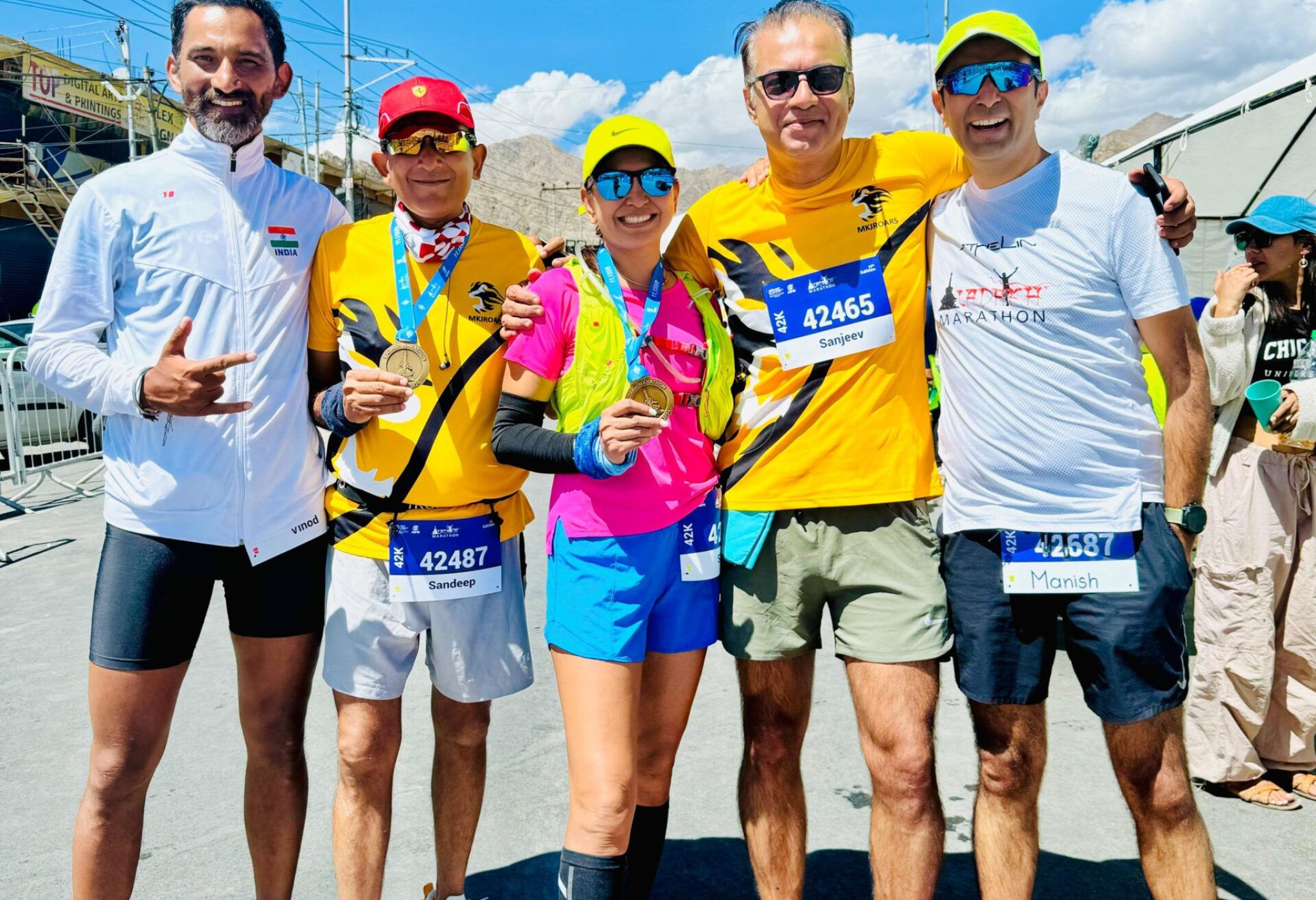
Race Day: The Ultimate Test
Race day, however, was a different test altogether. The first 32 km were an unbroken climb to Khardung La Top.
“At 27 km, it felt brutal. I had trained on this route, but race day was different. I used a run-walk strategy to survive the climb.”
He reached the top in 5 hours 50 minutes, but even the downhill was tough—low oxygen made every step harder. Between 32–40 km, dizziness slowed him to a walk. But at 63 km, when fatigue threatened to take over, a call from his coach changed everything.
“He gave me one of his signature pep talks. It lit a fire in me. I pushed hard and finished in 12 hours 51 minutes—well ahead of my target.”
It wasn’t fast, but it was forward. One step, then another. Run a few meters, walk a few, breathe deep, repeat. And slowly, the prayer-flagged finish line came into view.
The Reward: Pride and Perspective
Crossing that line wasn’t about timing. It was about grit. It was about remembering that resilience doesn’t roar – it whispers: just one more step.
Looking back, the Ladakh Marathon wasn’t the hardest race I’ve run because of weather or altitude — those become manageable with preparation. It was hard because of the silence, the stretches of open road, and that final climb that asks you to dig deeper than you thought possible.
And that’s the gift of Ladakh. It teaches you that toughness isn’t loud or showy. It’s the quiet strength to keep moving forward, even when the road tilts uphill and your body wants to stop.
For anyone looking to test themselves, Ladakh will surprise you. It will challenge you, humble you, and leave you lighter at heart than when you started. The medal may hang on a wall, but the memory of those last 5 kilometers – that will stay with me forever. That, and knocking one of my biggest bucket list marathons on my list.
Author :