Running with Flat Feet: Special Considerations and Solutions
Understanding Flat Feet and Running Challenges
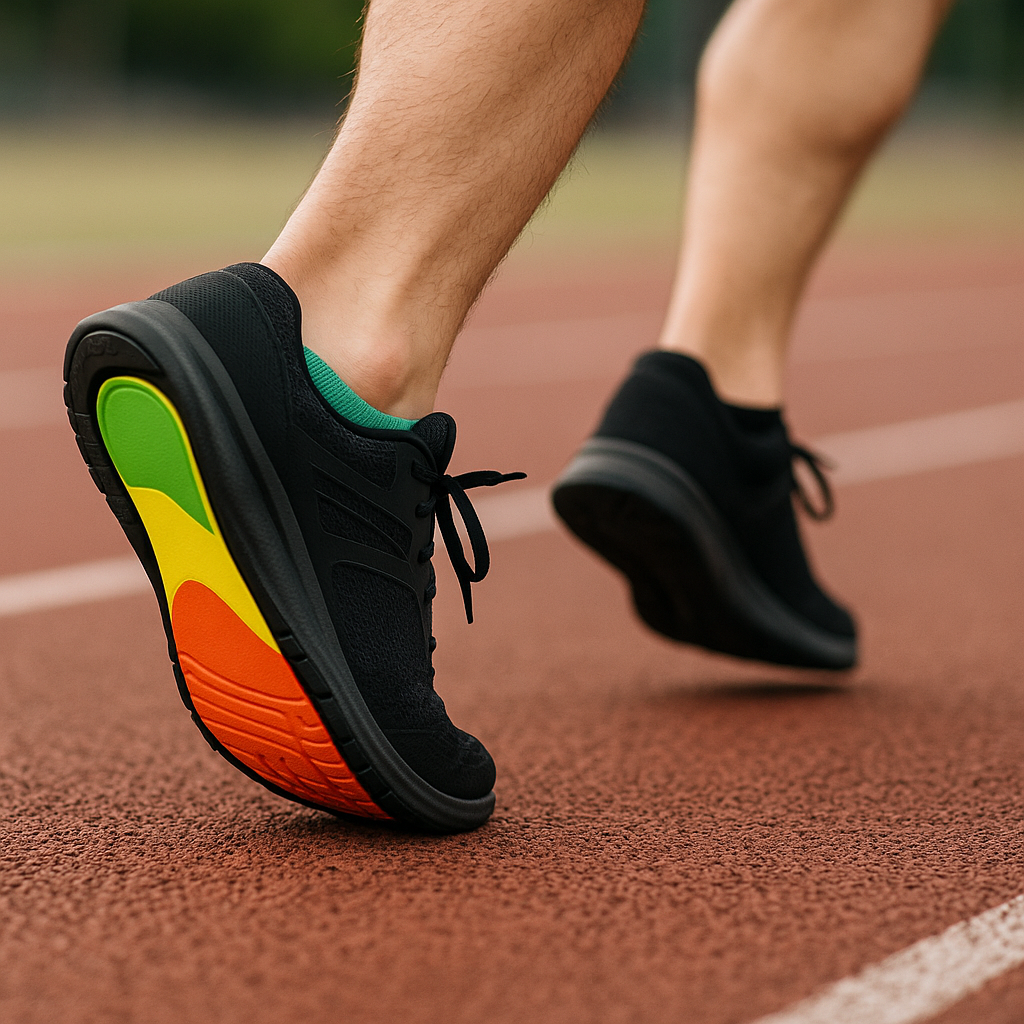
Flat feet, or fallen arches, occur when the inside of the foot has little to no visible arch, causing the entire sole to make contact with the ground. While some runners may never experience issues, others often face challenges such as overpronation, shin splints, plantar fasciitis, or knee pain.
Running with flat feet can affect biomechanics, leading to less efficient movement and increased stress on muscles and joints. But the good news? With the right approach, flat-footed runners can train effectively, avoid injuries, and even achieve personal bests.
Key Solutions for Runners with Flat Feet
- Choose the Right Footwear
Motion-control or stability running shoes help correct overpronation and provide needed arch support. - Use Orthotic Insoles
Custom or store-bought orthotics redistribute pressure and improve alignment. - Strengthen Supporting Muscles
Focus on foot, ankle, and calf exercises to enhance stability. Examples: towel scrunches, heel raises.
- Shorten Stride, Improve Cadence
A higher step rate reduces impact stress on feet and knees. - Prioritize Recovery
Stretch calves, roll arches with a ball, and use ice for soreness after runs. - Run on Softer Surfaces
Grass, tracks, or cushioned treadmills minimize repetitive stress compared to concrete. - Gradually Build Mileage
Avoid sudden mileage jumps – progressive training helps feet adapt safely.
Training Modifications and Solutions by Severity
Flat Foot Type | Considerations | Solutions |
Mild Flat Feet | Minimal pain, slight pronation | Stability shoes, light strengthening |
Moderate Flat Feet | Overpronation, occasional pain | Motion-control shoes, orthotics, cadence work |
Severe Flat Feet | Frequent pain, joint stress | Custom orthotics, physical therapy, gradual load |
This tailored approach ensures that every runner – regardless of arch shape – can find safe, effective ways to keep moving forward.
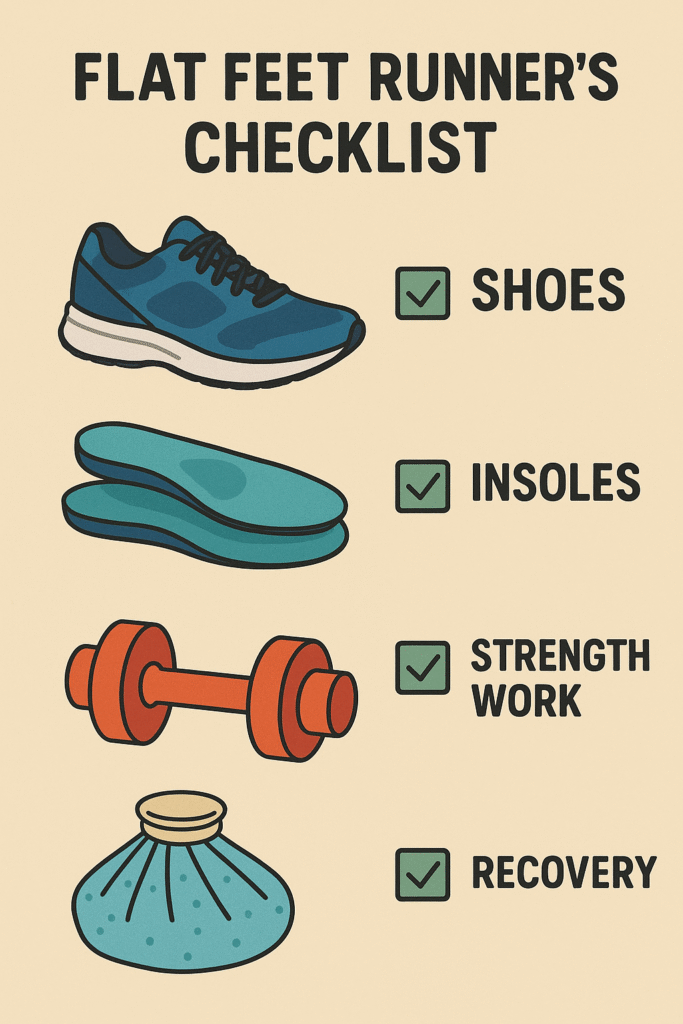
Flat feet may change how you run, but they don’t have to stop you from running strong. With the right footwear, orthotics, strengthening routines, and recovery habits, runners can overcome the biomechanical challenges of fallen arches.
At RunPlayGo, we’re dedicated to supporting all athletes – matching them with expert advice and the best gear to make running safer, more enjoyable, and more effective. Whether you’re chasing speed, distance, or simply comfort, the right strategies ensure flat feet are just one part of your running story – not a limitation.
Run smart. Stay supported. Achieve your goals with RunPlayGo.
Author :